Choosing a waterproof backpack is not simply a matter of reading the word “waterproof” on a product label. Real protection depends on fabric, seams, closures, and everyday handling.
Ron Gregg, an early waterproof-gear specialist associated with SealLine, explains the principle clearly: “A waterproof bag is only as reliable as its weakest closure.” That idea deserves attention. A coated nylon shell may resist heavy rain, yet an unsealed zipper can admit water within seconds. A roll-top closure usually offers stronger protection, but it needs several tight folds and careful fastening.
Think about where and how you will carry the bag. A commuter may need laptop padding, reflective details, and quick access. A coastal hiker may value welded seams, abrasion-resistant panels, and a stable harness. For cycling, chest and waist straps help prevent movement when the road becomes uneven. Small details matter.
Examine the construction closely. Hold the backpack under bright light. Check whether stitching creates visible gaps. Feel the zipper track. Look for taped or welded seams rather than ordinary sewn seams alone. If possible, test it with a gentle shower, not a bathtub full of water.
Do not confuse water-resistant with waterproof. That mistake is common. I have also learned that maximum protection can reduce convenience; tightly sealed openings often slow access. The “best” waterproof backpack is therefore not always the most sealed model. It should match your weather, load, travel habits, and tolerance for maintenance. Even excellent materials fail when the closure is overloaded or the fabric is neglected.
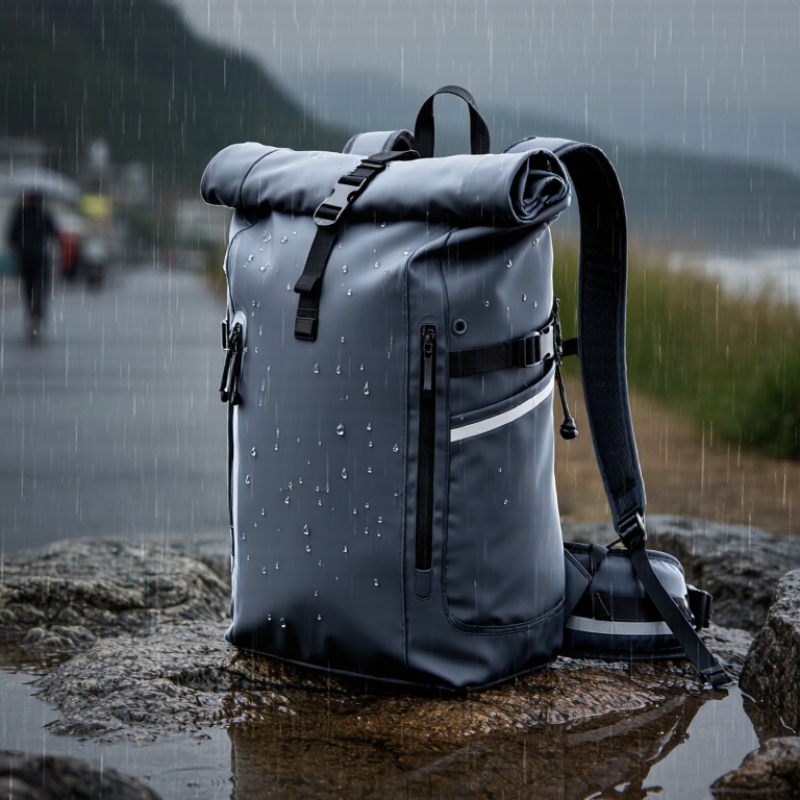
Waterproof labels can sound more precise than they are. Check what a rating actually measures before comparing backpacks. An IPX4 rating generally indicates protection from splashing water, while IPX7 refers to a defined immersion test. Those ratings do not automatically prove that every pocket, zipper, or seam on a backpack stays dry. Test conditions matter.
Some makers list a fabric’s hydrostatic-head rating, measured in millimeters. It indicates how much water pressure the fabric can resist in a test, not how the complete bag performs in driving rain. Seams, closures, and wear can change the result.
Small details count.
Look for sealed seams, a roll-top closure, and clear notes about testing. For a wet commute, these features may matter more than an impressive fabric number. For a day on exposed trails, a rain cover can add useful backup, though wind may shift it.
A damp towel inside is a simple way to check your pack at home. Still, labels leave gaps; I would not treat any single number as a promise of dry gear.
Choosing a waterproof backpack starts with an honest picture of where it will go. A commuter carrying a laptop through brief showers needs different protection from a kayaker facing repeated splashes. For daily travel, look for a padded sleeve, quick-access pockets, and a closure that seals reliably. For trail use, prioritize a stable fit and materials that can handle wet ground. “Waterproof” can describe different levels of protection, so check how seams and closures are constructed. A coated fabric may resist rain, while an unsealed zipper can still let water in.
Capacity should match the items you actually carry, not an imagined worst-case trip. Lay out your usual load: a 13-inch computer, lunch container, light jacket, and water bottle take up more room than they seem to. A bag that is too full can strain its closure; one that is too large may swing and feel awkward. Small detail. Check whether the bottle pocket holds your bottle securely when you bend or walk quickly.
Carrying needs matter just as much. Adjustable shoulder straps, a supportive back panel, and a chest strap can make a loaded bag more comfortable over a longer walk. Try it with weight inside, if possible, and notice pressure around your shoulders and hips. I find this easy to misjudge when a bag is empty. Extra padding can help, but it may also add bulk and heat. The right choice depends on your route, load, and how often you will carry it.
Start with the fabric, but do not trust the label alone. Coated nylon and polyester can repel rain, while thicker laminates often resist abrasion better. Check the fabric’s denier and feel for thin spots, rough patches, or peeling coating. A high rating helps, but it cannot compensate for weak construction. Feel the difference.
Seams are common leak paths. Look for fully taped seams, especially around the base and shoulder straps, where water can collect. Stitching should be even, with no loose threads or tiny gaps. Turn the pack inside out if possible. Look closely. A seam that appears neat may still let water through if its tape is lifting.
Closures matter just as much. A roll-top can seal reliably when rolled several times and clipped securely, though it takes longer to open. Water-resistant zippers are convenient, but inspect their covers and ends; small gaps can admit spray. Not always. Check the frame, strap anchors, and bottom panel for reinforced stitching and smooth, consistent joins. These details reveal build quality better than a polished product photo. For heavy rain, test the empty pack with a brief shower before trusting it with electronics. One limitation: no closure stays dependable if it is packed or fastened incorrectly.
Comfort begins with a close, stable fit. Adjust the shoulder straps until the pack sits near your back, not swinging below your hips. A sternum strap can reduce shifting, while a padded hip belt helps transfer weight on longer walks. Try the pack with a realistic load; an empty bag can hide pressure points. Organization matters, too. Keep a rain shell near the top, and place heavier items close to your spine. Small internal pockets help separate keys and cables, but too many can slow access. A pocket can still feel awkward when you’re wearing gloves.
Waterproof ratings need careful reading. IEC 60529 defines IPX7 testing as temporary immersion in water up to 1 meter for 30 minutes. That test does not automatically prove every zipper, seam, or closure will stay dry in real use. Check how the complete bag was tested, and look for a roll-top closure, sealed seams, and a protected exterior pocket for items that need quick access. For security, choose zipper pulls that can be secured together and keep valuables in an interior pocket. No pack is foolproof.
Tips: Load the pack before buying. Walk, bend, and reach for a water bottle; note any rubbing or awkward access. Put electronics in a separate dry pouch, even when the bag has a waterproof rating.
| Evaluation Dimension | What to Look For | Practical Check | Why It Matters |
|---|---|---|---|
| Water Protection | Check whether the pack is fully waterproof or only water-resistant. Look for sealed or welded seams, a roll-top closure, and waterproof fabric or a clearly stated protection rating. | Review the manufacturer’s testing details and closure instructions. A rain cover can add protection, but it may not protect the pack if submerged. | Water can enter through openings and seams even when the fabric itself resists water. “Waterproof” performance depends on the complete construction and how the pack is closed. |
| Fit and Comfort | Look for adjustable shoulder straps, a padded back panel, a sternum strap, and—especially for heavier loads—a supportive hip belt. Check that the back length suits your torso. | Load the pack with typical gear and walk for several minutes. The pack should sit close to your back without pressure points or straps digging into your shoulders. | A suitable fit helps distribute weight and reduces discomfort. Padded straps alone do not guarantee good support if the pack is poorly adjusted or overloaded. |
| Capacity and Load | Choose capacity based on what you carry and how long you are away. A compact day pack may suit essentials; longer trips generally require more room for clothing, food, and equipment. | Pack your usual items before buying, or compare the stated volume with a pack you already use. Check whether the bag remains comfortable when fully loaded. | A larger pack can encourage unnecessary packing, while an undersized one may be difficult to close securely. |
| Organization | Consider the main compartment, internal sleeves, small-item pockets, key clip, and external attachment points. Fewer openings can improve water protection. | Confirm that frequently used items are easy to reach and that electronics or documents can be kept away from damp gear. | Useful organization reduces rummaging, but extra pockets and zippers can add weight and create additional places where water may enter. |
| Closure and Access | Compare roll-top, zipper, and flap closures. A roll-top typically needs several folds and a secure fastening; waterproof zippers may require careful maintenance. | Open and close the pack with the items you expect to carry. Make sure the opening is large enough and the closure can be secured consistently. | The closure is a key part of water protection. A technically capable design may underperform if it is awkward to seal correctly. |
| Security | Look for lockable zipper pulls where relevant, discreet pockets, and attachment points that make the pack harder to casually remove. Avoid relying on a pocket as theft-proof. | Check whether zippers can be secured together and whether valuables can be carried in a pocket close to your body. | These features can deter opportunistic access, but no backpack can guarantee protection against theft. |
| Durability and Materials | Inspect fabric thickness, abrasion-resistant areas, stitching or welded joins, buckles, and strap attachment points. Ask about repair options and care requirements. | Check high-wear areas such as the base and shoulder-strap anchors. Make sure buckles engage firmly and seams show no gaps or loose threads. | Durability depends on the materials and construction as well as how the pack is used, loaded, cleaned, and stored. |
| Visibility and Safety | Reflective details can improve visibility in low light. A bright lining may also make small items easier to find inside the bag. | Check whether reflective areas are visible from more than one direction and whether they remain uncovered when the pack is worn. | Reflective details can help others notice you in low-light conditions, but they do not replace lights or safe road practices. |
| Weight and Packability | Compare the empty weight with the protection, support, and features offered. Check whether the pack compresses or folds if storage space matters. | Weigh the empty pack and consider its weight alongside your typical load. Test any compression straps with the pack partly filled. | Extra reinforcement and padding may add weight, while a very lightweight design may offer less structure or support. |
| Fit for Your Activity | Match the design to your use: commuting, cycling, hiking, boating, or travel can require different access, attachment, visibility, and support features. | Test the pack with the clothing and equipment you use for that activity, including a helmet or rain jacket if applicable. | A pack that works well for one activity may be inconvenient for another, even if its water protection is adequate. |
Buying tip: Confirm the stated level of water protection, capacity, fit range, and care instructions before purchasing. For valuable electronics, use an additional dry bag or protective case when exposure is likely.
To judge a waterproof backpack, test it before trusting it on a wet commute or trail. Place a dry towel and a few sheets of tissue inside, close every zipper, and spray the pack evenly with a garden hose for several minutes. Check the contents right away, especially beneath the lid, around seams, and near zipper ends. Water finds weak points. Avoid fully submerging the bag unless its instructions say that is safe; pressure can reveal leaks that ordinary rain would not.
Tips: Test pockets separately. Note where moisture appears. A damp outer fabric may be normal if the inner lining stays dry. Do not confuse a water-resistant finish with a waterproof construction.
Maintenance keeps protection dependable. Empty the pack after each wet trip, open its compartments, and let it air-dry completely in a shaded, ventilated spot. Grit can wear coatings and jam closures, so wipe dirt away with a soft cloth and mild soap, following the care label. Skip harsh cleaners and high heat; both may damage protective layers. Check seams, buckles, and zipper seals every few months. If water stops beading on the fabric, a compatible treatment may help, but it will not repair a damaged seam. It is easy to assume a backpack is still waterproof because it looks fine. That assumption deserves a check.
This chart shows the approximate pressure exerted by fresh water at different depths, calculated using p = ρgh. It provides context for hydrostatic-head testing, but is not a waterproof rating or a substitute for a backpack-specific test. Check the product’s stated test method and seam and zipper protection.
For routine care, follow the care label, rinse off dirt with fresh water, and let the backpack air-dry completely before storing it. Avoid heat and harsh cleaners that could damage coatings.
It generally indicates protection from splashing water. It does not prove every pocket, zipper, or seam will stay dry.
Not necessarily. IPX7 refers to a defined immersion test, not every real-world condition. Check how the complete bag was tested.
It measures how much water pressure a fabric resists in a test. Seams, closures, and wear can change how the whole backpack performs.
Look for sealed seams, a reliable closure, and clear testing notes. A roll-top can help. An unsealed zipper may still leak.
It can provide extra protection. Wind may shift it, though, so I would treat it as backup rather than a guarantee.
Lay out your usual items, such as a computer, lunch container, light jacket, and water bottle. An overfilled bag can strain its closure.
Put your bottle in the pocket, then bend or walk quickly. Small test. It is easy to overlook.
Try the backpack with weight inside. Adjustable straps, a supportive back panel, and a chest strap may help. An empty bag can mislead me.
Choosing a waterproof backpack starts with understanding what its protection rating means and how much exposure to water it can handle. Consider where and how you will use it, the capacity you need, and what you plan to carry. A bag for everyday commuting may have different requirements from one used on long outdoor trips. Look closely at its materials, seams, closures, and overall construction, since these details affect how well it keeps water out.
Comfort and practicality matter too. Check the fit, straps, organization, security features, and any extras that suit your routine. Before relying on a waterproof backpack in wet conditions, test its performance safely and make sure its closures are used as intended. Regularly clean and dry the bag, inspect seams and closures for wear, and follow care guidance to help maintain its protection over time.

omaska