How to Choose a Water Resistant Travel Backpack in 2026?

Time:2026-10-01 Author:Henry
0%

Choosing a water resistant travel backpack in 2026 requires more than comparing fabric labels or chasing the newest design. Your backpack may face sudden rain, crowded train platforms, dusty trails, and careless luggage handling. It must protect electronics, clothing, documents, and daily essentials without becoming uncomfortable.

Chris Townsend, a respected outdoor writer and backpacking expert, once offered a practical reminder: “The most important feature of a backpack is how well it carries.” That principle still matters. A water resistant coating is useful, but it cannot compensate for painful shoulder straps, poor weight distribution, or a weak frame. I have found that a bag can look remarkably durable in a showroom, then feel awkward after two hours of walking. Appearance can mislead.

Small details deserve serious attention. Check the zipper construction, seam protection, laptop compartment, ventilation, and adjustment range. A roll-top closure may resist heavy rain better, while a clamshell opening can make airport packing easier. Neither design is perfect. That is the uncomfortable truth.

Materials also require careful interpretation. “Water resistant” does not mean waterproof, and laboratory claims may not reflect real travel conditions. Look for independent reviews, clear warranty terms, and evidence from experienced users. Consider your climate, trip length, and carrying habits before choosing capacity. A 30-liter pack may suit a minimalist traveler, but it can feel restrictive during colder journeys.

This guide explains how to compare protection, comfort, organization, durability, and value. The goal is not to find a flawless bag. It is to find the most dependable compromise for your actual travels.
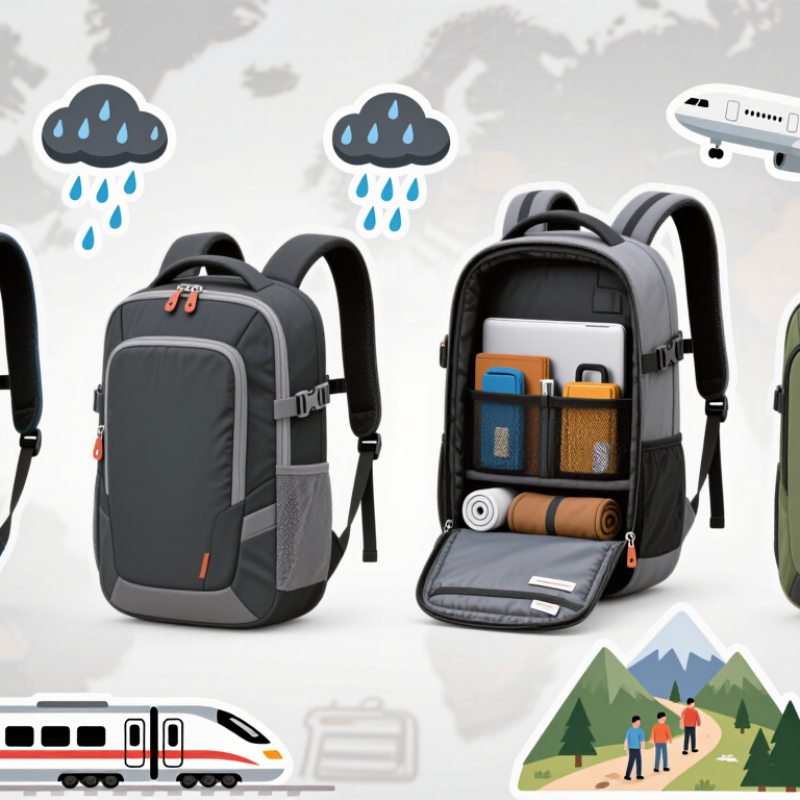
How to Choose a Water Resistant Travel Backpack in 2026?

Define Water Resistance and Identify Your Travel Needs

How to Choose a Water Resistant Travel Backpack in 2026?

Define Water Resistance and Identify Your Travel Needs

Water resistance means a backpack can delay water entry, not prevent it forever. It is not waterproof. Fabric coatings, sealed seams, covered zippers, and folded openings all affect protection. A stated testing rating can help, but it may describe only specific conditions. Check what the rating actually measures.

Think about your real travel routine. Will the bag face light rain, crowded trains, humid streets, or heavy storms? A commuter may need coated fabric and a reliable zipper. A hiker may need sealed seams, a rain cover, and quick access pockets. Someone carrying a laptop should choose a padded compartment raised above the base. Small details matter.

I once chose a lightweight pack that looked secure in a shop. A short shower exposed its weak zipper. My notebook stayed dry, but the outer pocket did not. That mistake changed my buying checklist. I now inspect stitching, zipper flaps, drain points, and fabric thickness by hand. Test it gently. Do not trust appearance alone.

Pack weight also deserves attention. Extra coatings and covers can add bulk during long walks. Try the backpack with your intended load, including a bottle and electronics. Shoulder straps should sit flat, while the back panel should allow airflow. Leave room for imperfect weather. Forecasts can be wrong, and travel plans often change.

Compare Materials, Construction, and Waterproofing Technologies

How to Choose a Water-Resistant Travel Backpack in 2026?

Compare Materials, Construction, and Waterproofing Technologies

Material choice affects weight, durability, and drying time. Coated nylon usually offers strong abrasion resistance with moderate water protection. Polyester can feel less technical, but it often costs less and holds color well. Recycled fabrics may reduce environmental impact, yet their performance depends on coating quality.

I once judged a backpack by its fabric alone. That was a mistake.

Construction matters just as much. Look for tightly stitched seams, reinforced stress points, and a raised base panel. Seam taping blocks water through needle holes. Welded seams provide stronger protection, especially around the lower compartment. A roll-top closure usually resists rain better than a standard zipper. However, waterproof zippers can be convenient and reliable when covered by protective flaps.

Water-resistant coatings, such as polyurethane or TPU, improve surface protection. Durable water repellent treatments help rain bead away, but they can wear down over time. No coating lasts forever.

Tips: Test the bag with a damp cloth before traveling. Check whether water enters through zippers, seams, or the base. Pack a small liner for electronics. Also, inspect the coating after repeated folding. I prefer honest water resistance over exaggerated waterproof claims. A backpack may survive a short shower, not hours of heavy rain.

Evaluate Capacity, Organization, Comfort, and Carrying Support

Choosing a water-resistant travel backpack in 2026 starts with capacity, not fabric claims. A 20–30 liter bag suits short trips and most personal-item limits, but airline dimensions still vary. Check them before purchasing. SITA’s 2024 Baggage IT Insights reported 6.9 mishandled bags per 1,000 passengers in 2023. A well-organized carry-on can reduce dependence on checked luggage. Look for a wide opening, separate laptop sleeve, passport pocket, and a raised base. A simple wet compartment helps protect clothing after rain. Water-resistant zippers help, but they do not make the pack waterproof.

Comfort becomes obvious after thirty minutes. Load the backpack with your usual items, then walk around a store or home. The shoulder straps should curve smoothly without cutting your neck. A sternum strap reduces movement, while a padded hip belt transfers weight toward your pelvis. For heavier loads, adjustable load lifters can pull the pack closer to your back. The International Ergonomics Association emphasizes neutral posture and reducing unnecessary load in manual carrying tasks. Keep dense items near your spine. Small details matter.

I once chose a sleek pack with poor back support. It looked efficient. My shoulders disagreed. I also underestimated cable storage and packed too many pockets. A breathable back panel, firm padding, and restrained organization may work better than impressive specifications. Test the handle, compression straps, and stitching under load. Reflective details are useful in dim stations, although they cannot replace careful awareness.

Check Security Features, Durability, and Weather Protection

A water-resistant travel backpack should protect more than your clothes. It should also reduce easy access to personal items in crowded places. Look for lockable zipper pulls, discreet pockets, and compartments that rest against your back. These features do not prevent every theft, but they can slow unwanted access. Avoid placing passports or cash in outer pockets.

Durability depends on construction, not just fabric thickness. Check reinforced stitching around shoulder straps, handles, and the bottom panel. Dense fabric may resist abrasion, while padded straps improve comfort under a heavy load. I usually test a backpack with books, a water bottle, and a jacket before traveling. Weak stitching often appears when the bag is fully packed. It is easy to miss.

Weather protection needs careful inspection. Water-resistant fabric can handle light rain, but it may fail during long exposure or heavy storms. Look for coated material, covered zippers, and seams with reliable sealing. A removable rain cover adds useful protection, although wind can pull it loose. I once trusted a coated surface without checking the zipper design. The contents stayed mostly dry, but one corner became damp. That mistake changed my packing habits. Keep electronics in separate waterproof pouches, even inside a weather-resistant bag. A backpack can be well designed and still face conditions beyond its limits.

How to Choose a Water Resistant Travel Backpack in 2026? - Check Security Features, Durability, and Weather Protection
Evaluation Area Basic Requirement Recommended Target Higher-Protection Option What to Check Before Buying
Capacity 18–25 L 35–45 L with compression straps A 25–35 L pack is usually suitable for a daily commute, a short business trip, or a one- to three-day journey. Confirm that the dimensions meet airline personal-item or carry-on rules.
Empty Weight 1.2–1.6 kg Below 1.8 kg with a structured frame A lighter pack leaves more of the airline or personal carrying allowance available for clothing, electronics, and other gear.
Water-Resistance Level Water-repellent fabric and covered seams Waterproof construction with a roll-top closure or tested water-entry rating “Water-resistant” does not mean fully waterproof. Check whether the stated protection applies to the fabric only or to the complete backpack.
Hydrostatic Head 1,500–3,000 mm 10,000 mm or more Hydrostatic-head values indicate fabric water pressure resistance. Actual performance also depends on seams, zippers, closures, and construction quality.
Rain Protection Integrated rain cover or water-repellent shell Fully enclosed waterproof compartments or roll-top closure A rain cover can protect the main body but may leave shoulder straps, the back panel, or exposed pockets less protected in heavy rain.
Zipper Protection Standard coil zippers with fabric flaps Waterproof zipper system on the main compartment Zippers are common water-entry points. Inspect whether the zipper is protected along its full length and whether the pocket design prevents water from pooling.
Laptop Protection Padded sleeve for a 13–14 inch device Separate, raised, water-resistant compartment with a secure closure A suspended sleeve keeps the device above the bottom of the bag, reducing impact risk when the pack is placed on the ground.
Anti-Theft Design Lockable zipper pulls Rear-opening main compartment, slash-resistant panels, and secured attachment points No backpack is theft-proof. Prefer features that slow unauthorized access while keeping essential items close to the wearer in crowded areas.
Material Durability Coated polyester or nylon Abrasion-resistant fabric with reinforced stitching at handles, straps, and load-bearing seams Higher denier can improve abrasion resistance, but fabric quality, weave, coating, stitching, and reinforcement are equally important.
Abrasion Resistance Basic Designed for demanding use Look for documented abrasion-test results or clear reinforcement in areas that contact floors, vehicle cargo holds, and rough surfaces.
Load Capacity Up to 6 kg 9–12 kg with a supportive frame and padded hip belt Do not choose capacity by volume alone. Shoulder straps, back-panel structure, and load distribution determine comfort when the pack is full.
Harness and Comfort Padded shoulder straps Adjustable torso length, padded hip belt, and ventilated back system Try the backpack with realistic weight. The shoulder straps should sit comfortably without restricting movement or pressing against the neck.
Handle and Stitching Strength Single-stitched grab handle Multiple reinforcement points with double or box stitching in high-load areas Check the handle, strap junctions, and bottom corners because these areas receive concentrated stress during lifting and baggage handling.
Security Organization One internal organizer RFID-shielded pocket, concealed compartments, and cable-routing or tracker pocket RFID shielding can reduce some forms of contactless card scanning, but it does not replace strong passwords, device locks, or careful travel habits.
Visibility and Safety Neutral color Reflective panels, emergency information label, and secure light-attachment loop Reflective details improve visibility in low-light conditions but are not a substitute for lights or reflective clothing when cycling or walking near traffic.
Testing and Warranty Information Basic care instructions Documented testing, replacement parts, and multi-year repair coverage Prefer transparent information about water testing, load limits, fabric composition, cleaning, repairs, and exclusions rather than vague claims such as “all-weather.”
Buying rule for 2026: For most travelers, prioritize a 25–35 L capacity, an empty weight below 1.4 kg, water-resistant zippers or storm flaps, a protected laptop compartment, lockable zippers, reinforced load-bearing seams, and a separate rain-cover strategy. Water protection should be matched to the expected weather and not treated as a substitute for waterproof packing of critical electronics and documents.

Balance Price, Maintenance, and Long-Term Travel Value

How to Choose a Water Resistant Travel Backpack in 2026?

Balance Price, Maintenance, and Long-Term Travel Value

A water-resistant backpack is not automatically waterproof. Look for a coated fabric, sealed zippers, and protected seams. During a rainy train transfer, these details can keep a passport and phone dry. However, a rain cover still matters during heavy downpours. Many water-resistant materials resist short showers, not hours of tropical rain.

Price should reflect repairability, not only appearance. The 2024 UN Tourism World Tourism Barometer recorded about 1.4 billion international tourist arrivals in 2024. Frequent travel increases abrasion on shoulder straps, base panels, and zipper tracks. Choose replaceable pulls, strong stitching, and accessible compartments. I would inspect the bottom after placing the bag on rough pavement. Small design flaws appear quickly there.

Maintenance affects long-term value. Air-dry the pack after wet trips, remove sand from zippers, and avoid harsh detergents. Follow the care label. The European Environment Agency reported roughly 19 kilograms of textile consumption per EU resident in 2022. A durable pack used for years can reduce replacement waste, though durability claims still need evidence. Ask for fabric specifications, testing standards, and repair support. Not every expensive bag deserves trust. A cheaper pack may win if its coating lasts, repairs remain practical, and the fit prevents shoulder strain.

FAQS

What does water resistance mean in a travel backpack?

Water resistance delays water entry. It does not provide permanent waterproof protection. Coated fabric, sealed seams, covered zippers, and folded openings improve performance. Heavy rain can still reach the contents.

How should I match a backpack to my travel routine?

Consider light rain, crowded trains, humid streets, and sudden storms. Commuters may need coated fabric and dependable zippers. Hikers may need sealed seams, a rain cover, and quick-access pockets. Your routine matters more than appearance.

What should I check before buying a weather-resistant backpack?

Inspect stitching, zipper flaps, drain points, and fabric thickness by hand. Look closely at the bottom panel. Test the bag with books, a bottle, and a jacket. A full load can reveal weak seams.

How can I protect a laptop and electronics?

Choose a padded compartment raised above the base. Keep electronics inside separate waterproof pouches. Water can enter through a zipper corner. I once trusted the fabric too much.

Which security features are useful during crowded travel?

Lockable zipper pulls, discreet pockets, and back-facing compartments can slow unwanted access. Keep passports and cash away from outer pockets. These features reduce risk. They cannot prevent every theft.

Does a rain cover make a backpack fully waterproof?

No. A rain cover adds protection during heavy showers and long exposure. Strong wind may pull it loose. Check the cover fit before traveling. Weather protection remains imperfect.

How do weight and comfort affect backpack choice?

Extra coatings and covers can add bulk. Try the backpack with your intended load, including electronics and a bottle. Shoulder straps should sit flat. The back panel should allow airflow. I may still overpack.

How can I maintain a water-resistant backpack for longer use?

Air-dry it after wet trips. Remove sand from zippers. Avoid harsh detergents and follow the care label. Inspect the base, straps, and zipper tracks regularly. Repairable parts can improve long-term value. Expensive does not always mean durable.

Conclusion

Choosing a water resistant travel backpack in 2026 starts with understanding the difference between water resistance and full waterproofing, then matching the bag to your travel conditions. Consider the climate, trip length, transportation methods, and the items you need to carry. Compare fabrics, sealed seams, coated zippers, and protective finishes, while checking whether the construction can handle light rain, splashes, or more demanding weather. A practical design should offer enough capacity without becoming bulky, with organized compartments for clothing, electronics, documents, and daily essentials.

Comfort and security are equally important. Look for adjustable straps, supportive back panels, balanced weight distribution, durable materials, and discreet pockets that help protect personal belongings. Reflective details, reinforced attachment points, and reliable closures can improve travel confidence. Finally, compare the price with expected durability, cleaning requirements, repairability, and long-term usefulness. The best water resistant travel backpack is one that provides dependable weather protection, comfortable carrying, smart organization, and lasting value for your specific travel style.


Henry

Henry

Henry is a dedicated marketing professional with a profound expertise in the company's offerings. With years of experience in the industry, he possesses an impressive understanding of the market dynamics and consumer behaviors that drive success. Henry is committed to sharing his insights through......