China Best Travel Backpack with Laptop Compartment Supplier

Time:2026-11-17 Author:Madeline
0%

Choosing a China-based supplier for a travel backpack with laptop compartment takes more than comparing prices and product photos. Buyers should assess how the bag protects devices, handles daily travel, and holds up after repeated use. Small details matter: padded laptop sleeves, smooth zippers, reinforced handles, and seams that remain secure when the main compartment is full. A good-looking sample is useful, but it is not proof of consistent production.

For a practical supplier review, ask about laptop-size options, fabric specifications, interior organization, customization, and sample lead times. Request clear measurements for the laptop compartment rather than relying on labels such as “fits most devices.” Check whether the sleeve sits away from the bag’s base, and inspect stitching around stress points. These checks are simple. They can prevent expensive surprises. Where possible, compare a pre-production sample with the approved specifications and ask how quality checks are recorded. Reliable answers should be specific, not merely reassuring.

The best supplier depends on the buyer’s market, order volume, and intended use. A lightweight bag for short business trips may need different materials and pockets than a commuter pack used every day. There is no perfect design. More padding can add weight, and extra compartments can make access less convenient. It is worth discussing those trade-offs openly. This guide outlines the features, supplier questions, and evaluation steps that help buyers make a more informed choice when sourcing a travel backpack with laptop compartment from China.
China Best Travel Backpack with Laptop Compartment Supplier

Overview of Laptop-Compartment Travel Backpacks

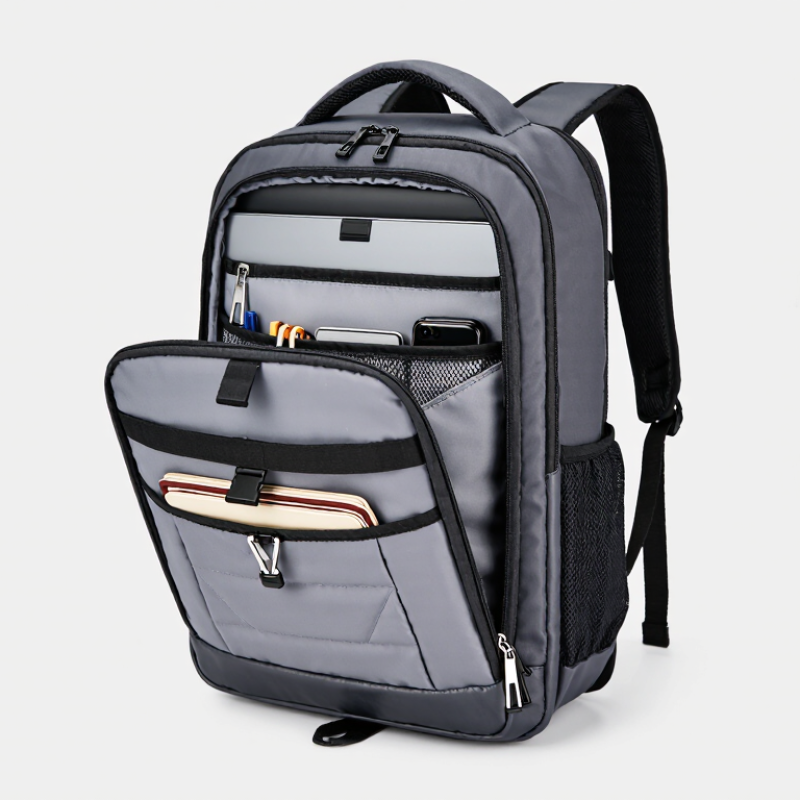
A travel backpack with a laptop compartment should protect electronics without feeling awkward to carry. A padded sleeve near the back panel helps limit movement while walking through a station or airport. Check for a raised base, a smooth zipper path, and room for a charger, notebook, and light jacket. Small details matter.

Match the sleeve to your laptop’s actual height, width, and thickness, not only its advertised screen size. Soft lining can prevent scratches, while firmer panels add structure but may reduce packing space. Check whether the laptop is easy to reach without unpacking clothes. That saves time. Still, an extra-access zipper can create another point to inspect for wear.

Comfort depends on more than shoulder straps. Breathable back padding, adjustable straps, and a balanced load can help on longer walks. Yet extra padding and multiple pockets also add weight; they do not guarantee a comfortable fit. I still find pocket layouts easy to overcomplicate. For product teams evaluating suppliers, inspect sample stitching, zipper movement, and sleeve dimensions with a loaded bag, not just an empty display sample. A showroom test can be misleading.

Key Features and Design Considerations

For a China-based travel backpack supplier, the laptop compartment should protect devices without making the bag awkward to carry. The GBTA 2024 Business Travel Index Outlook estimated global business travel spending would reach US$1.48 trillion in 2024. That steady movement between offices, airports, and hotels makes practical device access important. A padded sleeve should sit close to the wearer’s back, with a raised base to reduce impact when the bag is set down. Check the opening against common laptop sizes, then test it with a device inside; padding can shrink usable space.

Strap placement matters. Wide, adjustable shoulder straps and a breathable back panel help distribute weight during long walks through terminals. Keep chargers and cables in a separate pocket, so their hard edges do not press against the screen. A luggage pass-through can be useful, but it should not weaken the back panel or trap heat around the laptop. There is no perfect layout. A very slim profile may look neat but offer too little room for a power adapter and documents.

Tips: Ask the supplier for loaded-bag wear tests, zipper-cycle results, and water-resistance test conditions. These details make comparisons more reliable than a vague “waterproof” claim. Also test the backpack under realistic packing conditions; an empty sample can hide uncomfortable pressure points.

Materials, Construction, and Quality Standards

China Best Travel Backpack with Laptop Compartment Supplier

Materials and construction determine whether a laptop backpack stays comfortable after months of commuting. Textile Exchange’s Materials Market Report 2024 estimates that global fiber production reached 124 million tonnes in 2023, with polyester accounting for 57%. That scale makes fiber choice important, but recycled content alone does not prove durability. Ask suppliers for fabric composition, coating details, and test records. A dense woven shell can resist daily scuffs, while a water-resistant coating helps shed light rain. It is not a substitute for sealed seams or a waterproof design.

Check how the bag is built. Laptop sleeves should hold devices close to the back, with padding beneath the base and around the corners. Inspect zipper stitching, bartacks at strap joints, and binding along raw edges. These small details often reveal more than a fabric swatch. Request abrasion and seam-strength test results; ISO 12947 and ISO 13934-1 describe recognized methods for assessing fabric abrasion and tensile properties. Results need context, though. A laboratory test cannot fully reproduce a crowded train or an overloaded bag.

Tips: Ask for a sample, then load it with a laptop and books. Check strap comfort, zipper movement, and whether the sleeve keeps the device from hitting the floor. One detail can still be missed: test the bag after repeated use, not just on day one.

How Suppliers Manufacture and Customize Backpacks

A travel backpack with a laptop compartment starts with a clear product brief. Suppliers review the intended laptop size, travel habits, and target load before cutting fabric. A paper pattern or digital layout helps check pocket placement and panel proportions. Even a few centimeters can affect comfort.

Next, technicians select shell fabric, lining, foam, zippers, and webbing based on durability and weight. They sew a sample and test practical details: whether a laptop slides in smoothly, whether seams pull under load, and whether water beads on the outer surface. Small details matter. A rushed sample may look right but reveal a stiff shoulder strap or a pocket that catches charging cables. That is worth revisiting.

Customization can cover dimensions, colors, internal dividers, logo placement, and packaging. Buyers should approve a physical sample and confirm measurements before bulk production. Suppliers may also inspect stitching, zipper movement, and fabric shade across production batches. Not every request improves the bag; extra padding can add weight, while more pockets may make access slower. A careful supplier explains these trade-offs, records approved specifications, and shares realistic production timelines. Mistakes can still happen, so clear sample notes and a final inspection plan make a meaningful difference.

China Best Travel Backpack with Laptop Compartment Supplier - How Suppliers Manufacture and Customize Backpacks

Typical manufacturing options and reference specifications for travel backpacks with laptop compartments. Final specifications depend on the design, materials, and testing requirements.

Manufacturing Area Typical Options or Reference Data How Suppliers Customize Production and Quality Checks
Capacity and dimensions Many travel daypacks are designed in the 20–35 L range. External dimensions are set to suit the intended use and packing layout. Adjust overall size, depth, compartment layout, and expansion features to match a product brief or target market. Verify the finished bag against approved measurements and check that zippers and compartments operate without obstruction.
Laptop compartment Common designs accommodate laptops around 13–16 inches. Fit should be confirmed using the device’s actual width, height, and thickness; screen size alone does not define its dimensions. Specify sleeve dimensions, opening direction, suspended or base-level placement, divider pockets, and padding. Foam padding thickness is selected for the required design and protection level. Test fit with representative devices or size gauges, and inspect seams, padding coverage, and sleeve retention.
Shell and lining materials Options include polyester or nylon fabrics in specifications such as 300D, 600D, or 500D. Denier describes yarn linear density and does not, by itself, determine fabric durability or water resistance. Select fabric construction, color, coating, lining, and recycled-content options according to appearance, use, and testing needs. Check fabric shade and defects, confirm material specifications, and review any requested performance-test results.
Patterning and cutting A sample pattern is developed from the approved design before fabric panels, pocket pieces, and reinforcement parts are cut. Revise panel shapes, pocket placement, color blocking, and reinforcement locations during sample development. Check cut-piece dimensions, fabric direction, and alignment of printed or patterned materials before sewing.
Sewing and assembly Assembly typically progresses from smaller components and pockets to larger panels, straps, lining, and final finishing. Choose strap shape, back-panel construction, handle placement, pocket arrangement, and hardware finishes. Inspect seam consistency, bartacks or other reinforcements at load-bearing points, zipper function, and overall workmanship.
Comfort and carrying features Common features include padded shoulder straps, a padded back panel, adjustable strap length, and a top carry handle. Customize foam density and coverage, strap width and curvature, breathable mesh, sternum strap, and luggage pass-through. Review fit on intended users or a suitable form, and inspect adjusters, attachment points, and stitching under the specified test plan.
Branding and finishing Decoration methods can include embroidery, woven labels, printed graphics, and molded or sewn-on patches. Set artwork, placement, color, label content, packaging, and care instructions in the approved production specifications. Compare decoration with approved artwork and check loose threads, stains, packaging, and final measurements before shipment.

Reference note: Material choices, dimensions, tests, and production timelines should be confirmed in the product specification and sample approval process.

How to Evaluate a China-Based Backpack Supplier

Evaluating a China-based backpack supplier takes more than comparing prices and product photos. Start with the laptop compartment: ask for its internal measurements, padding thickness, and closure type. Place a laptop-sized test case inside the sample, then check whether it shifts when the bag is tilted. Looks can deceive. Inspect the stitching around shoulder straps and zippers, where daily loads put the most strain. A simple loaded carry test can reveal loose seams or uncomfortable pressure points. One sample cannot predict every production issue, but it gives you useful questions to ask.

Request a clear material specification, sample approval process, and written inspection plan. Ask who checks goods during production and how defects are recorded. Supplier answers should be specific, not just reassuring. For example, request photos of finished bags beside a measurement guide, and confirm how color or dimension differences are handled. Communication matters too. A delayed reply is not proof of poor quality, though unclear answers about tolerances deserve attention. It is easy to overvalue a polished catalog; I would treat it as a starting point, not evidence. Compare the approved sample with production checks before placing a large order, and keep expectations realistic.

China Backpack Supplier Evaluation: Laptop Compartment Fit Check

Compare the calculated width and height of common 16:9 laptop screens when reviewing compartment specifications and samples. Screen measurements exclude bezels; always verify fit using the laptop’s actual external dimensions and the compartment’s usable interior dimensions.

FAQS

How should I check whether a laptop compartment fits my device?

Measure your laptop’s height, width, and thickness. Screen size alone can mislead. Test the compartment with a device-shaped case.

Where should the laptop sleeve sit?

A sleeve near the back panel can limit movement while walking. A raised base helps reduce impact when setting the bag down.

What should I pack beside the laptop?

Keep chargers and cables in a separate pocket. Their hard edges can press against the screen. Small details matter.

How can I assess backpack comfort?

Check adjustable straps, breathable back padding, and load balance during a longer walk. Extra padding adds weight, though. It is not a guarantee.

What should I inspect on a sample backpack?

Examine stitching near straps and zippers. Test zipper movement with the bag loaded, not just empty. A display sample can hide pressure points.

How can I compare suppliers fairly?

Request internal sleeve measurements, padding details, material specifications, and a written inspection plan. Clear answers help. A polished catalog is not proof.

What tests should I ask a supplier to provide?

Ask about loaded-bag wear tests, zipper-cycle results, and water-resistance test conditions. “Water-resistant” means little without details.

Does an extra-access zipper always make a backpack better?

It can make the laptop easier to reach without unpacking clothes. But it adds another area to inspect for wear. I may be overthinking that trade-off.

Conclusion

A travel backpack with laptop compartment is designed to combine secure device storage with practical space for clothing, documents, and everyday essentials. A well-planned layout may include a padded laptop sleeve, easy-access pockets, adjustable straps, and supportive back padding. The right balance of capacity, comfort, organization, and weight helps make the backpack useful for commuting and longer trips alike.

Materials and construction influence durability and performance, so buyers should consider fabric strength, stitching, zippers, padding, and quality-control procedures. Suppliers can typically adapt dimensions, colors, pocket arrangements, materials, and other design details to meet different requirements. When evaluating a China-based supplier, review its manufacturing capabilities, customization process, sample quality, communication, production consistency, and delivery arrangements. A careful assessment helps buyers choose a supplier able to produce a reliable backpack that matches their intended use and specifications.


Madeline

Madeline

Madeline is a dedicated marketing professional with a wealth of expertise in our company's core offerings. With a keen understanding of the industry, she brings a unique perspective to her role, consistently delivering high-quality content that highlights the superior aspects of our products. As......