7 Travel Rucksack Backpack Buying Tips for Global Buyers?

Time:2026-11-10 Author:Amelia
0%

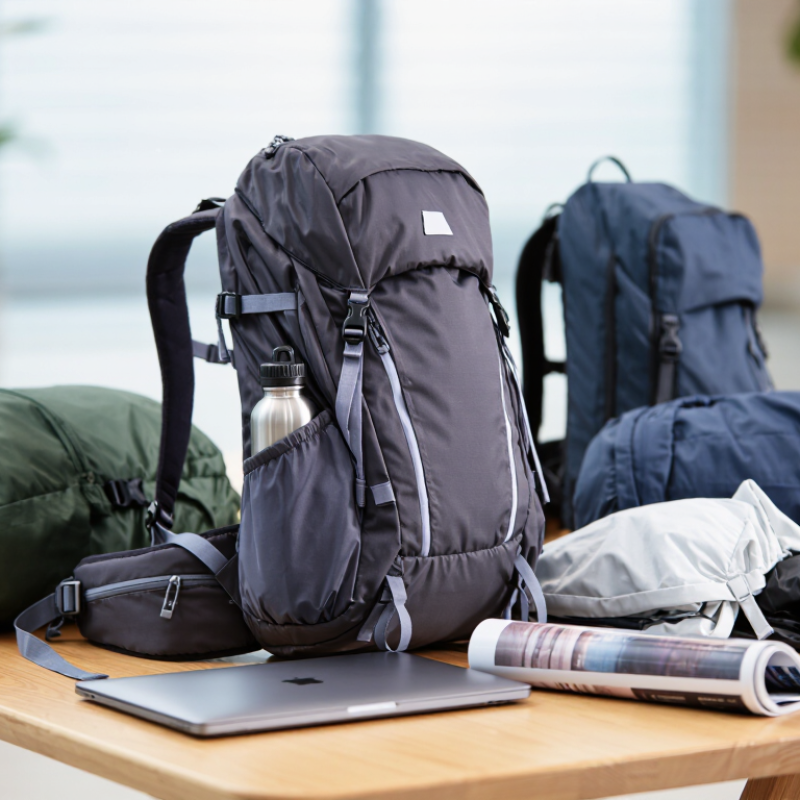
Choosing a travel rucksack backpack is about more than picking a color or choosing the largest capacity. The right pack should carry comfortably, protect everyday essentials, and suit the length and style of your trip. Fit matters. Measure your torso, adjust the shoulder straps, and check whether the hip belt rests comfortably on your hips. Try the pack with some weight inside; an empty display model can feel very different on a long walk. Small details count. A useful side pocket, smooth zipper, or easy-to-reach water bottle can make busy travel days simpler.

Global buyers should also compare practical details that vary by destination and carrier. Check the pack’s dimensions against your airline’s current cabin baggage rules rather than relying on a general size label. Look for durable fabric, reinforced stitching, and zippers that open without snagging. Water resistance can help during a sudden shower, but it does not always replace a separate rain cover. Consider the empty weight, capacity in liters, laptop protection, and warranty terms before deciding. Even a highly rated bag may feel uncomfortable after an hour, so reviews cannot replace a careful fit check. These seven buying tips will help you compare options with clearer priorities and fewer assumptions. The best choice is not always the most expensive—or the one with the most features.
7 Travel Rucksack Backpack Buying Tips for Global Buyers?

Define Trip Load: 1 L of Pack Volume Equals 1,000 cm³

A rucksack’s volume is a useful starting point, not a packing guarantee. One litre equals 1,000 cm³, as defined by the National Institute of Standards and Technology’s Guide for the Use of the International System of Units (SP 811). So a 30 L pack holds 30,000 cm³ by volume. That figure describes space, not comfort or usable capacity.

Picture a rain jacket, shoes, and a tightly rolled sweater inside the bag. Their awkward shapes leave gaps, while a rigid toiletry case may waste space. ASTM International’s F2153 test method sets out a standardized approach to measuring backpack capacity, helping buyers compare stated volumes more consistently. Still, measurement methods and pack layouts can differ. Numbers can mislead.

Estimate your trip load before choosing a size. A weekend of light clothing may fit a smaller pack; bulky layers or camera equipment need more room. Check whether the stated capacity includes external pockets, then compare dimensions and internal compartments. If possible, test-pack your actual items. A litre is exact. Packing rarely is.

Travel Rucksack Capacity: Liters to Cubic Centimeters

Pack volume is commonly measured in liters. Since 1 liter equals 1,000 cm³, a 40 L rucksack has a capacity of 40,000 cm³. Compare capacity with your trip length, gear, and packing style when choosing a pack.

Check Cabin Fit Against IATA’s 56 × 45 × 25 cm Reference

IATA’s commonly cited cabin-bag reference is 56 × 45 × 25 cm, but it is not a universal boarding guarantee. Airlines can set smaller limits, especially on regional aircraft or full flights. The International Air Transport Association’s June 2024 passenger forecast projected 4.96 billion air travelers that year. For buyers, that scale makes checking the actual carrier’s rules essential. Measure your rucksack when fully packed, including bulging pockets and loose straps. A soft bag can squeeze into a frame, but an overstuffed front pocket can add several centimeters.

Tip: Pack a sample load before measuring. Include a laptop, a filled water bottle, and a light jacket; then check height, width, and depth. Compare the result with the airline’s published cabin limits, not just the IATA reference. Leave room for compression. It helps, but it is not magic.

A useful fit check is to place the loaded bag beside a tape measure and gently press its sides inward. Do not rely on forcing it into an airport sizer. That test may damage seams, and staff may ask you to remove the bag. IATA’s figure is a reference, not a promise. I would still recheck before each trip; airline rules and aircraft assignments can change, and a few centimeters matter.

Measure Torso Length and Compare the Pack’s Loaded Weight

A rucksack can feel comfortable in a shop and pull painfully at the shoulders after an hour. Measure torso length before comparing models. Find the prominent bone at the base of your neck, then measure down to the top of your hip bones. Use that number against the pack maker’s stated torso range, not your overall height. A few centimeters can shift weight onto the wrong area. I would not trust a size chart alone; bodies and measurement technique vary.

Then compare weight with the pack loaded as you will travel. Put in your usual clothes, water, electronics, and a small toiletry pouch, then weigh it on a luggage scale. Check whether the shoulder straps stay put and the hip belt rests on your hips without digging in. The American Academy of Pediatrics advises that children’s backpacks stay below 15% of body weight. That is a child-focused guideline, not a universal adult travel limit, but it shows why load matters. A light empty pack can still become tiring when filled. Repack once, remove items you do not need, and test it on stairs; the result may be less tidy than a spreadsheet, but more useful.

Assess Fabric Denier: 600D Yarn Weighs 600 g per 9,000 m

When comparing travel rucksacks, read fabric specifications rather than relying on a “heavy-duty” label. Denier measures yarn linear mass: 600D means 9,000 metres of yarn weigh 600 grams. It does not mean one square metre of fabric weighs 600 grams. Higher denier often indicates thicker yarn, but it cannot prove durability by itself.

Tips: Compare denier across similar fibers and fabric constructions. Check the weave, coating, stitching, and seam reinforcement. Ask suppliers for abrasion or tear-test results when available. Feel the material, too.

A 600D polyester panel may suit a travel bag, while lighter fabric can work well on a daypack. The difference depends on weave density, yarn quality, backing, and how stress is distributed around straps. Inspect corners and handle attachments; these spots often show early wear. A thicker swatch can look reassuring, but that first impression may be wrong. Seam quality can matter more. Treat denier as a useful screening measure, not a complete quality verdict. Request a sample and test it with a loaded bag before placing a large order.

Verify Rain Protection: ISO 811 Tests Resistance to Water Penetration

A rucksack’s fabric can look tightly woven and still let water through under sustained pressure. ISO 811 provides a measurable way to assess this risk. In the test, water pressure is applied to a fabric specimen until penetration reaches the specified endpoint. Results are commonly reported as the height of a water column, in millimetres. Higher readings generally indicate greater resistance, but they do not promise a fully waterproof backpack.

Ask suppliers for the actual test report, not just a “water-resistant” claim. Check which fabric was tested, which side faced the water, and whether the tested material matches the production item. That matters. A swatch result says little about needle holes, stitched seams, zippers, or the pack’s closure design. Even a strong fabric can leak where construction is weak.

Consider how the rucksack will be used. A commuter caught in brief showers has different needs from a traveler carrying clothing through hours of steady rain. Look for separate information about seam sealing and zipper protection, and ask whether the complete pack has been evaluated in realistic rain conditions. ISO 811 is useful evidence, not the whole answer. I would avoid treating one high number as a guarantee; the test may not reflect every detail of real use.

7 Travel Rucksack Backpack Buying Tips for Global Buyers: Verify Rain Protection with ISO 811 Tests

Buying tip What to verify Useful evidence or measurement Buyer’s check
1. Verify fabric water resistance Ask whether the outer fabric was tested for resistance to water penetration using ISO 811. This test applies increasing water pressure to a fabric specimen and records when water penetrates. Request the test report, including the measured hydrostatic pressure, test date, specimen description, and laboratory details. Results are commonly reported in centimetres or millimetres of water pressure. Compare like-for-like fabric results. ISO 811 does not set one universal “waterproof backpack” pass level; agree on a required result for your intended use.
2. Check the complete bag, not just the fabric Water can enter through stitching, seams, zippers, closures, and attachment points even when the fabric resists penetration. Ask for construction details such as seam sealing or taping, zipper-cover design, and any whole-product rain test or documented spray test. Treat an ISO 811 fabric result as evidence about the fabric specimen—not proof that the assembled backpack is fully waterproof.
3. Inspect seams and stress points Review shoulder-strap joins, the base, top panel, and seams around pockets. These areas may experience both water exposure and mechanical stress. Request close-up product photos or a sample inspection showing seam construction, reinforcement, and any seam tape. Check that reinforcement does not leave exposed needle holes in critical areas. Confirm that the construction shown in the sample matches the production specification and the intended level of rain protection.
4. Evaluate closures and access points Check the main opening, external pockets, and zipper garages or storm flaps. A water-resistant zipper or cover can reduce exposure but does not automatically make a bag waterproof. Ask for the closure type and care instructions, and inspect whether zipper ends and pocket openings are protected from direct rainfall. Test access points on a sample under realistic conditions; do not rely on a fabric test to assess zipper or opening performance.
5. Confirm coating and finish durability Water-repellent finishes and coatings can change with abrasion, folding, cleaning, and use. Confirm what treatment is applied and how it should be maintained. Request care instructions and, where relevant, test results from new and conditioned or laundered specimens. Ask whether the ISO 811 result applies to the finished fabric supplied for production. Compare the tested material with the production material, including coating, finish, fabric construction, and care conditions.
6. Match protection to the travel conditions A short shower, prolonged heavy rain, and submersion are different exposure conditions. Intended use should guide the required design and test evidence. State the expected exposure, duration, and whether a rain cover or waterproof inner liner is part of the product specification. For prolonged or severe rain, consider a cover or separate waterproof protection for valuables; do not assume an ISO 811 fabric result means the bag can be submerged.
7. Check report traceability and product consistency A report is useful only if its tested specimen represents the backpack material and construction being purchased. Check the report’s standard and edition, sample identification, test result, test date, and laboratory. Ask how production materials are checked against the approved sample. Keep the agreed specification and report with purchasing records, and request notice and re-evaluation if materials or construction change.

Note: ISO 811 measures a fabric’s resistance to water penetration under a hydrostatic-pressure test. It does not by itself certify a complete backpack as waterproof or define a universal pass threshold for every travel use.

FAQS

What does a 30-litre backpack capacity mean?

It represents 30,000 cubic centimetres of space. It does not guarantee that 30 litres of gear will fit comfortably.

Why can the same volume feel different between backpacks?

A rain jacket, shoes, and rolled sweater leave awkward gaps. Rigid cases and pocket layouts can waste space. Numbers can mislead.

How can I estimate the backpack size I need?

Consider your clothing, shoes, and equipment. Bulky layers or camera gear need extra room. Test-pack your actual items if possible.

Does a 30-litre pack always fit cabin-bag limits?

No. A commonly cited reference is 56 × 45 × 25 centimetres, but airline limits can differ.

How should I check cabin fit at home?

Pack a laptop, filled water bottle, and light jacket. Measure the loaded bag, including bulging pockets and loose straps.

Can a soft backpack be squeezed into an airport sizer?

It may compress, but forcing it can strain seams. A packed front pocket can also add several centimetres. Leave some room.

What does a fabric water-resistance test tell me?

It measures how much water pressure fabric resists before water penetrates. Higher results generally mean greater resistance, not guaranteed waterproofing.

Why is a fabric test not enough to judge a whole backpack?

Stitch holes, seams, zippers, and closures can still leak. Ask whether the tested fabric matches the finished pack.

What should I check before using a backpack in heavy rain?

Look for details about sealed seams, protected zippers, and testing of the complete pack. A fabric result alone is incomplete.

Should I rely on one measurement or test result?

Not entirely. Recheck airline limits before travelling, and treat rain-test figures as useful evidence, not promises. I still find this easy to misjudge.

Conclusion

Choosing a travel rucksack backpack starts with matching its capacity to the trip. Estimate what you plan to carry, remembering that one liter of pack volume equals 1,000 cubic centimeters. If you hope to use it as cabin luggage, compare its dimensions with the IATA reference of 56 × 45 × 25 cm, while checking the specific requirements for your journey. A pack that fits your belongings and travel plans is more useful than one chosen by capacity alone.

For a comfortable, durable choice, measure your torso and consider how the backpack feels when fully loaded, not just its empty weight. Check the fabric’s denier rating as a guide to yarn weight: 600D yarn weighs 600 grams per 9,000 meters. Finally, assess rain protection by looking for water-penetration testing based on ISO 811. Together, these checks help you compare backpacks based on fit, carrying comfort, construction, and protection from wet conditions.


Amelia

Amelia

Amelia is a seasoned marketing professional with a wealth of expertise in our company’s core offerings. With an unwavering passion for driving growth and innovation, she plays a pivotal role in shaping our marketing strategies and enhancing brand visibility. A key aspect of her responsibilities......