2026 Top Travel Rucksack for Men Buying Guide

Time:2026-11-03 Author:Aria
0%

Travel is moving at scale again, and a dependable pack can make airport changes less awkward. UN Tourism reported about 1.4 billion international tourist arrivals in 2024, roughly 99% of 2019 levels. SITA’s 2024 Baggage IT Insights recorded 6.9 mishandled bags per 1,000 passengers in 2023. Those figures describe travel conditions, not the performance of any particular backpack. Still, they make durability, organization, and easy access practical considerations.

This 2026 buying guide examines what matters in a travel rucksack for men: a comfortable harness, useful capacity, durable fabric, secure zippers, and pockets that work when you are moving. Picture a crowded station, a water bottle slipping from a side pocket, or a laptop pressing against your back. Small design choices show up quickly. A 35-liter label alone tells you little; torso fit and airline size limits matter, too. Limits vary. That detail is easy to overlook.

Outdoor-industry veteran Yvon Chouinard’s often-cited line, “The more you know, the less you need,” is a useful lens for choosing gear. It is a principle, not a pack-fitting rule. Compare specifications with your own trip length, load, and carrying comfort, rather than relying on marketing claims. I still overpack sometimes. That is worth remembering. A rucksack should carry what you need without turning every walk to the gate into a shoulder workout.
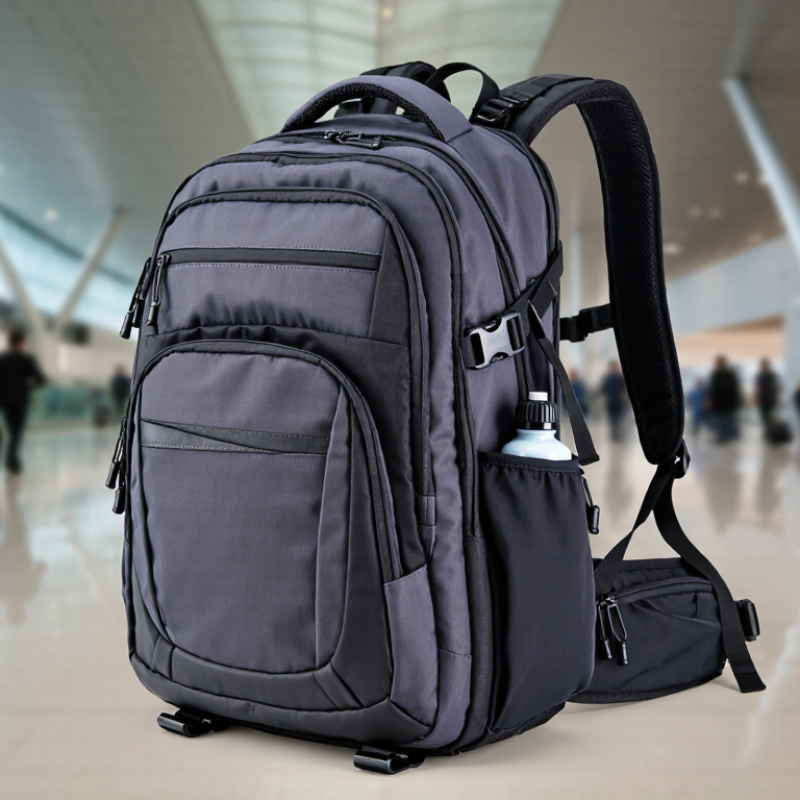
2026 Top Travel Rucksack for Men Buying Guide

Understanding Travel Rucksacks and Men’s Travel Needs

A travel rucksack is more than a large backpack: it must carry daily essentials, move comfortably through stations, and fit the trip’s packing style. Men’s bodies vary, so “men’s fit” should not replace checking torso length, shoulder width, and hip-belt position. A loaded pack should sit close to the back, with weight resting mainly on the hips. Test it with shoes and a jacket, not just a T-shirt.

Fit matters.

Trip length helps set capacity. A 30–40-liter pack can suit a short, carefully packed trip, but airline cabin limits vary by route and carrier. Check the actual dimensions before relying on overhead-bin space.

SITA’s 2024 Baggage IT Insights reported 6.9 mishandled bags per 1,000 passengers in 2023; keeping essentials in a cabin bag can reduce disruption if checked luggage is delayed.

UN Tourism reported about 1.4 billion international tourist arrivals in 2024, showing how many travelers share busy transport spaces. A slim profile, lockable compartments, and easy-to-reach documents can make those transitions simpler.

Small detail.

I still misjudge how much water and a spare layer add. Weigh the packed rucksack before leaving, then adjust straps while walking.

Key Features to Compare in a Travel Rucksack

A travel rucksack should fit your actual route, not just look spacious on a product page. Check its packed dimensions against your airline’s current cabin-bag rules; allowances vary by carrier and fare. Then compare the harness: padded shoulder straps, a sternum strap, and a breathable back panel can make a long walk across a station less punishing. Adjust the straps with a loaded bag, not an empty one. Comfort matters.

Capacity is only useful when the layout keeps essentials reachable. Look for a wide opening, a separate laptop sleeve, and pockets that hold a passport or water bottle without digging through clothes. SITA’s 2024 Baggage IT Insights report recorded 6.9 mishandled bags per 1,000 passengers in 2023. That figure covers checked baggage, not rucksacks, but it is a reminder to keep valuables close and use secure, easy-to-check closures. Small details count. Water-resistant fabric and reinforced stitching help with everyday wear, though no fabric should be assumed waterproof without testing. I would also check whether the empty pack feels stiff or awkward; added structure can protect gear, but it may cost comfort and usable space.

Choosing the Right Capacity, Fit, and Carrying System

A travel rucksack should fit your body before it fits your itinerary. Capacity depends on trip length, weather, and whether you carry a laptop or bulky layers. The Outdoor Industry Association’s 2024 Outdoor Participation Trends Report estimates that 175.8 million Americans took part in outdoor recreation in 2023. That broad mix of activities is a reminder: one volume rarely suits every trip. A compact bag can work for a short city stay; longer trips may need room for spare shoes and a warm layer. Check the airline’s current cabin-bag limits, too. Rules vary.

Fit matters more than a dramatic capacity number. Measure your torso, then adjust the shoulder straps so the pack sits close without pressing your neck. The hip belt should rest around your hip bones and take some load off your shoulders. Try it with weight inside. Walk, bend, and reach overhead. Small adjustments can change the feel.

Look for a sternum strap, padded shoulder straps, and a supportive hip belt if you expect long walks. A ventilated back panel may help in warm weather, though it can add bulk. That trade-off is easy to miss online. Heavy items should sit close to your back, with frequently used items near the top. I’d still test the packed bag on stairs; a comfortable shop-floor fit can feel different after an hour.

2026 Top Travel Rucksack for Men Buying Guide - Choosing the Right Capacity, Fit, and Carrying System

Travel Style Suggested Capacity Typical Trip Length Fit Priorities Carrying System Useful Features Approximate Loaded Weight
Minimal city travel 20–30 L Day trips or 1–2 nights with light packing Check shoulder-strap placement and ensure the pack does not extend far below the lower back. Padded shoulder straps; a sternum strap is helpful for longer walks. A substantial hip belt is usually unnecessary for light loads. Laptop sleeve, water-bottle pocket, lockable main zippers, and a luggage pass-through if needed. About 4–8 kg, depending on contents.
Carry-on-focused travel 30–40 L Several days to about one week, depending on clothing and laundry access Choose a torso length that lets the hip belt sit over the hip bones; test the pack with weight inside. Padded shoulder straps, adjustable sternum strap, and a supportive hip belt for walking between transport connections. Clamshell opening, compression straps, a protected document pocket, and dimensions that can be checked against the carrier’s current cabin-bag rules. About 6–12 kg, depending on contents.
Extended independent travel 40–55 L One to several weeks, especially when carrying extra clothing or equipment Prioritize adjustable torso fit, a hip belt that wraps securely, and even shoulder contact without pressure points. Padded hip belt, load lifters, sternum strap, and a frame or framesheet suited to the intended load. Top or panel access, compression straps, a rain cover or water-resistant construction, and easily reached essentials pockets. About 8–16 kg, depending on contents and trip needs.
Travel with hiking days 45–65 L Multi-day travel with outdoor equipment or less frequent resupply Fit the pack to measured torso length, not height alone; confirm the hip belt can be centered over the hip bones. Supportive internal frame, padded hip belt, adjustable shoulder harness, sternum strap, and load lifters. Hip-belt pockets, hydration compatibility, trekking-pole attachment points, compression straps, and a practical rain-protection plan. About 10–18 kg, depending on equipment and supplies.
Bulky gear or cold-weather travel 60–75 L or more Long trips requiring bulky insulation, specialist equipment, or extended supplies Test the fully loaded pack; confirm the harness remains stable and the hip belt carries weight comfortably. A load-supporting frame and well-padded, adjustable hip belt are especially important. Select capacity only when the extra space is genuinely needed. Strong compression, durable attachment points, wide access, and a design compatible with the gear being carried. About 12–20 kg or more; comfort and safe carrying depend on fit, conditioning, and the individual load.

Fit and capacity note: Liter ranges and loaded weights are planning guidelines, not universal limits. Measure torso length from the prominent vertebra at the base of the neck to the level of the top of the hip bones, then use the pack maker’s sizing guidance. Try the rucksack with a representative load and adjust the hip belt, shoulder straps, sternum strap, and load lifters. Airline cabin-bag limits vary by carrier and route; verify current dimensions before travel.

Evaluating Top Travel Rucksack Styles for 2026

2026 Top Travel Rucksack for Men Buying Guide

Evaluating Top Travel Rucksack Styles for 2026

For 2026, compare travel rucksacks by access, fit, and load stability rather than appearance alone. Clamshell styles open like a suitcase, making folded shirts and packing cubes easier to reach. Their wide openings can be awkward in crowded trains, though. Top-loading designs feel simpler and often carry soft layers well, but small items can disappear beneath a rain jacket. Check the harness against your torso length; a bag that fits a display mannequin may rub your shoulders after a long walk.

Roll-top rucksacks offer flexible capacity when a trip includes an extra sweater or market finds. They can take longer to pack neatly, and the closure may feel fussy when you are tired. A panel-loading hybrid gives quicker access without fully opening the bag. Inspect the zipper track, stitching, and padded back panel, then test the bag with a realistic load. Walk, bend, and lift it. Comfort can change once the water bottle and laptop are inside.

Tips: Choose a size that fits your usual trip, not your rarest packing ambition. Keep essentials in a reachable pocket, and confirm the bag fits your carry-on limits. Try it on with weight; I still underestimate how much a dense laptop changes the feel.

Checking Durability, Security, and Long-Term Value

A travel rucksack earns trust through details you can inspect. Tug the shoulder straps gently and check whether their stitching pulls away from the body. Look for reinforced seams at the handle and base, where a full load creates steady strain. Smooth, wide zippers are easier to use with cold fingers. Small detail. Press the back panel and note whether it keeps its shape when empty. A water-resistant finish helps in a brief shower, but it is not a substitute for a rain cover.

Security depends partly on how the bag opens. Zippers tucked against your back can make casual access harder in crowded stations, while a bright interior lining helps you spot small items quickly. No design is foolproof. Check that buckles close firmly and that adjustment straps do not trail near wheels or doors. For long-term value, look for replaceable zipper pulls, washable fabric, and repairable straps. I tend to focus too much on capacity; a bag that feels comfortable after ten minutes may rub after a full day. Try it with a packed load, then inspect the seams again after a wet trip. A little wear is normal. Loose stitching is not.

2026 Travel Rucksack Buying Guide: Cabin-Bag Size References

Compare common maximum cabin-bag dimensions in centimeters before choosing a rucksack. Allowances vary by airline, fare, and route; always check your carrier’s current rules.

The references shown are 56 × 45 × 25 cm for the IATA Cabin OK reference, 55.9 × 35.6 × 22.9 cm for a common North American carry-on limit, and 55 × 40 × 20 cm for a common European cabin-bag limit. Measure the rucksack externally, including pockets, handles, and other protrusions. A bag that fits these examples is not guaranteed to meet every airline’s requirements.

FAQS

How do I choose the right rucksack capacity?

A 30–40-liter pack can suit a short, carefully packed trip. Trip length, weather, spare shoes, and a laptop all affect the space you need. Check your airline’s current cabin dimensions.

How should a travel rucksack fit?

Measure your torso and adjust the shoulder straps so the pack sits close to your back. The hip belt should rest around your hip bones and carry some weight. Fit matters.

What features help on long walks?

Padded shoulder straps, a supportive hip belt, and a sternum strap can make carrying easier. A ventilated back panel may help in warm weather, but it can add bulk. Trade-offs matter.

Which opening style is easiest to pack?

Clamshell packs open wide, so folded shirts and packing cubes are easier to reach. Top-loading packs can carry soft layers well, but small items may vanish beneath a jacket. Annoying, sometimes.

Are roll-top rucksacks useful for changing plans?

Their capacity can adjust when you add a sweater or bring back small purchases. Packing them neatly may take longer, especially when you are tired.

How can I keep essentials accessible during travel?

Put documents and frequently used items in reachable pockets. A slim profile and lockable compartments can help in busy stations. Keep essentials close.

How should I test a rucksack before a trip?

Load it with a laptop, water bottle, shoes, and jacket. Walk, bend, reach overhead, and try a flight of stairs. A shop-floor fit can feel different later.

How can I reduce problems if checked luggage is delayed?

Keep essential items in your cabin bag, and weigh the packed rucksack before leaving. I still underestimate how much a water bottle and spare layer add.

Conclusion

Choosing the right travel rucksack for men starts with understanding how you travel: a short city break, a long journey, or a mix of work and leisure can call for different features. Compare practical details such as compartment layout, access, weather resistance, weight, and organization, then select a capacity that holds your essentials without encouraging unnecessary bulk. A comfortable fit matters just as much: adjustable shoulder straps, a supportive back panel, and a stable carrying system can make a loaded pack easier to manage.

For 2026, consider which style best suits your routine, from streamlined carry-on designs to roomier packs for extended trips. Check the quality of materials, stitching, zippers, and other components, along with useful security features that help keep belongings organized and protected. Finally, weigh comfort, durability, and versatility against the price. A well-chosen rucksack should serve your travel habits reliably over time, rather than simply offering the most pockets or the largest capacity.


Aria

Aria

Aria is a dedicated marketing professional with a deep passion for innovative strategies and a keen understanding of our company's product offerings. With a wealth of experience in the industry, Aria excels at crafting engaging content that highlights the unique features and benefits of our......