2026 Top Urban Commuter Backpack Suppliers

Time:2026-10-16 Author:Isabella
0%

As urban travel becomes faster and more demanding, the urban commuter backpack must do more than carry a laptop. It should protect devices, organize daily essentials, and remain comfortable during crowded train rides or long walks. In 2026, suppliers face higher expectations for durability, material transparency, ergonomic design, and responsible production.

This guide reviews leading urban commuter backpack suppliers through practical, evidence-based criteria. We examine product construction, fabric performance, stitching, zippers, padding, warranty terms, and customization capabilities. We also consider how suppliers respond to changing workplace habits, including hybrid schedules and short business trips. Small details matter. A stable shoulder strap can prevent discomfort. A water-resistant base can protect a bag placed beside a rainy platform.

Reliable evaluation requires more than attractive product photos. Our research approach considers supplier documentation, sample quality, manufacturing experience, customer feedback, and available compliance records. Where information is incomplete, we identify that limitation rather than presenting assumptions as facts. No supplier is perfect.

Our initial shortlist was too broad. Some companies offered impressive catalogs but limited evidence of consistent quality. That finding changed the evaluation. The final selection focuses on suppliers that demonstrate practical capability, clear communication, and repeatable production standards. Readers should still request samples, confirm specifications, and test comfort before placing large orders. A supplier that fits one commuter market may not suit another.

The following overview highlights notable 2026 suppliers and explains where each may perform best. It also recognizes areas needing further verification, because dependable purchasing decisions require evidence, not confident wording alone.
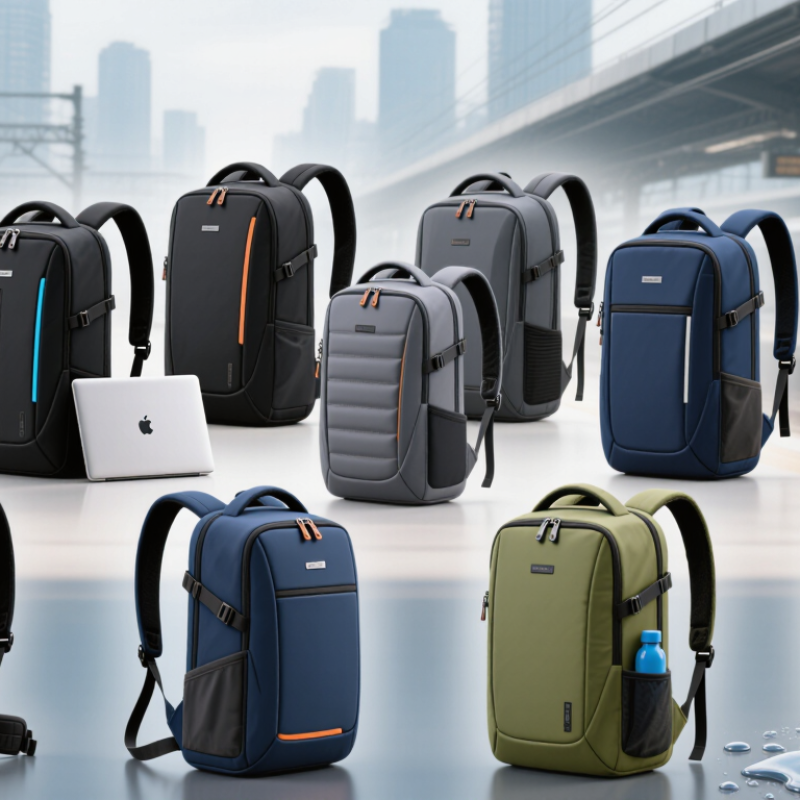
2026 Top Urban Commuter Backpack Suppliers

Urban Commuter Backpack Suppliers: Market Definition and Selection Criteria

2026 Top Urban Commuter Backpack Suppliers

Urban commuter backpacks serve people moving through offices, trains, bicycles, and crowded sidewalks. They usually range from 15 to 30 liters. Typical features include padded laptop storage, organized pockets, breathable back panels, and weather-resistant fabrics. The market excludes hiking packs designed for extended outdoor loads. It also differs from school bags through stronger workday organization and device protection.

A reliable supplier should show practical manufacturing experience, not only attractive product photos. Ask for material specifications, stitching samples, load-test results, and inspection records. Check whether zippers, shoulder straps, and laptop compartments survive repeated daily use. A sample should fit a 14-inch laptop securely and remain comfortable on a packed train. Small details matter, such as a stable base and a quick-access transit card pocket.

Supplier selection also depends on traceability, production capacity, minimum order quantities, and delivery control. Request clear information about recycled content, coating performance, color consistency, and factory quality procedures. Applicable product-safety and labeling requirements should be reviewed for each sales market. A polished sample can hide weak stitching. I have seen this happen. Independent testing may cost more, but it reduces expensive surprises. No supplier is perfect, so buyers should record defects, correction times, and warranty responses before making a long-term decision.

Urban Commuter Backpack Suppliers: Market Definition and Selection Criteria

This 100-point reference model reflects the practical priorities commonly used when evaluating urban commuter backpack suppliers. Product performance, user comfort, protection, and supply reliability are weighted separately; the framework does not represent company or brand performance data.

Key Features of High-Quality Urban Commuter Backpacks

A high-quality urban commuter backpack should support real movement, not just look polished in a product photo. During daily testing, I check shoulder comfort after a crowded train ride, a twenty-minute walk, and several stair climbs. Wide, adjustable straps help distribute weight, while a breathable back panel reduces heat near the spine. Comfort matters.

The main compartment should fit work essentials without becoming a deep, disorganized space. A padded laptop sleeve needs a raised base, protecting the device when the bag touches the ground. Separate pockets can hold keys, charging cables, a water bottle, and transit cards. Smooth zippers, reinforced stitching, and strong attachment points indicate careful construction. Water resistance helps, but it should not be confused with complete waterproofing. That distinction deserves clear supplier information.

Good suppliers should explain fabric composition, load testing, dimensions, and quality-control procedures. They should also provide consistent samples before large orders. In my experience, small flaws often appear around zipper corners and strap seams, not in the center panels. No design is perfect. A slightly heavier bag may offer better protection, yet it can become tiring during a long commute. Reflective details improve visibility in dim streets, while repairable components may extend practical service life. A thoughtful backpack leaves room for imperfect routines, including hurried packing and an occasional overloaded morning.

Leading Supplier Categories and Product Specializations

2026 Top Urban Commuter Backpack Suppliers

Urban commuter backpack suppliers are increasingly defined by specialization, not broad catalogs. Technical shell suppliers focus on water-resistant fabrics, sealed zippers, and reinforced base panels. Their bags suit cyclists and train commuters facing sudden rain. Laptop-focused suppliers prioritize padded compartments, false-bottom protection, and quick-access charging pockets. These details matter during crowded platform transfers.

Ergonomic specialists design contoured back panels, breathable mesh, and load-balancing shoulder straps. A practical test is simple: carry a laptop, lunch box, jacket, and bottle for thirty minutes. Pressure points appear quickly. Some suppliers also develop compact cycling packs with reflective trims, helmet holders, and stable chest straps. Others concentrate on modular designs, allowing users to add pouches or remove unnecessary panels.

Sustainable-material suppliers use recycled fibers, repairable hardware, and traceable production records. Their claims should be checked through test reports, material certificates, and factory audits. Private-label manufacturers offer flexible colors, logo placement, and small production runs for retailers. However, customization can weaken delivery reliability. I have seen attractive prototypes fail during zipper testing. No supplier gets everything right. Buyers should compare abrasion resistance, stitching quality, warranty procedures, and sample consistency before placing larger orders. A clean product sheet is useful, but real handling reveals more.

2026 Top Urban Commuter Backpack Suppliers - Leading Supplier Categories and Product Specializations
Supplier Category Primary Product Specialization Common Urban Commuter Features Typical Materials Common Capacity Range Best-Fit Buyer Requirements Relevant Quality and Compliance Considerations
OEM and ODM Backpack Manufacturers Custom commuter backpacks developed from technical specifications or existing factory designs Laptop compartment Organizer panel Custom logo placement Private-label packaging Polyester, recycled polyester, nylon, cotton canvas, molded foam, mesh lining 15–30 liters Retailers, corporate merchandise programs, online brands, and institutional buyers requiring custom appearance or packaging Sample approval, colorfastness, seam strength, zipper performance, restricted-substance testing, and packaging specifications
Technical and Performance Backpack Suppliers Durable backpacks for cycling, walking, mixed-mode commuting, and frequent outdoor exposure Breathable back panel Load-bearing shoulder straps Helmet attachment Reflective details High-tenacity nylon, coated polyester, ripstop fabric, EVA foam, polyurethane-coated textiles 18–35 liters Outdoor retailers, mobility brands, cycling-focused distributors, and users needing enhanced abrasion and weather resistance Abrasion resistance, hydrostatic or water-repellency testing, bartack reinforcement, buckle durability, and reflective-material performance
Sustainable Backpack Suppliers Urban bags emphasizing recycled, recycled-content, or lower-impact material options Recycled fabric options Repairable components Minimal packaging Material traceability Recycled polyester, recycled nylon, organic cotton, recycled webbing, water-based coatings 16–28 liters Brands and organizations with sustainability targets, environmental procurement policies, or recycled-content claims Verification of recycled content, supply-chain documentation, chemical management, durability testing, and substantiation of environmental claims
Business and Laptop Backpack Suppliers Structured commuter backpacks for laptops, tablets, documents, and office accessories Padded laptop sleeve Document compartment Cable organizer Luggage pass-through Ballistic nylon, polyester, faux leather, molded EVA, brushed polyester lining 18–32 liters Corporate buyers, office-supply distributors, travel retailers, and professionals carrying electronics Compartment dimensions, padding thickness, drop protection, handle pull strength, zipper cycle testing, and compatibility with declared device sizes
Water-Resistant and Waterproof Bag Suppliers Backpacks designed to protect contents from rain, splashes, and wet commuting conditions Roll-top closure Sealed or coated seams Water-resistant zippers Drainage design TPU-coated polyester, PVC-coated fabric, polyurethane-coated nylon, welded synthetic textiles 15– thirty liters Commuters in wet climates, cyclists, delivery users, and buyers requiring weather-protection performance Water-ingress testing, seam construction, coating adhesion, hydrolysis resistance, odor control, and clear distinction between water-resistant and waterproof claims
Anti-Theft and Security Backpack Suppliers Commuter bags incorporating access-control and cut-resistance features Concealed zippers Lockable pulls Cut-resistant panels RFID-shielded pocket options Polyester, nylon, steel-reinforced mesh, cut-resistant composite fabric, molded plastic components 15–26 liters Public-transit users, business travelers, urban retailers, and buyers focused on theft deterrence Cut-resistance validation, zipper and buckle strength, strap attachment testing, RFID performance where claimed, and responsible security statements
Cycling and Active-Commuter Backpack Suppliers Compact, stable backpacks for bicycle commuting and active daily travel Chest and waist stabilizers Ventilated back system Hydration compatibility Visibility accents Lightweight nylon, polyester mesh, spacer mesh, EVA foam, elastic webbing 10–25 liters Cycling retailers, sports distributors, delivery riders, and users prioritizing low weight and movement stability Strap adjustment range, load stability, sweat and colorfastness testing, reflective visibility, buckle fatigue, and ergonomic fit evaluation
High-Volume Promotional and Corporate Gift Suppliers Cost-efficient commuter backpacks for events, employee programs, schools, and promotional campaigns Simple construction Large decoration areas Bulk packaging Standard color selection Polyester, non-woven polypropylene, cotton canvas, standard webbing, plastic hardware 12–25 liters Event organizers, employers, educational institutions, distributors, and buyers with high-volume delivery schedules Artwork accuracy, print or embroidery durability, carton packing, lot consistency, basic load testing, and delivery inspection procedures
Premium Leather and Hybrid Material Suppliers Business-oriented commuter backpacks combining refined appearance with everyday carrying functions Structured silhouette Padded electronics storage Metal hardware Premium lining Full-grain or corrected-grain leather, leather alternatives, nylon, polyester, microfiber, metal hardware 16–28 liters Premium retail, executive gifting, professional services, and consumers seeking office-to-travel versatility Leather classification, color transfer, hardware corrosion resistance, edge finishing, seam quality, lining durability, and material-origin documentation
Modular and Travel-Commute Backpack Suppliers Expandable backpacks for office use, short trips, and multi-purpose urban travel Expandable main compartment Compression straps Packing cube compatibility Trolley sleeve Nylon, polyester, EVA foam, polypropylene sheet, aluminum or polymer frame components 20–40 liters Frequent commuters, travel retailers, business travelers, and buyers seeking one-bag versatility Expansion-system durability, handle and strap load testing, wheel-luggage compatibility, zipper cycle testing, and balanced-load assessment
Category-level information reflects common product configurations and procurement considerations in the urban commuter backpack market; exact specifications vary by supplier, material selection, and purchase agreement.

Comparing Supplier Quality, Pricing, Capacity, and Sustainability

Urban commuter backpack suppliers should be compared through measurable quality, pricing, capacity, and sustainability evidence. A reliable supplier provides samples with even stitching, smooth zippers, reinforced shoulder straps, and balanced weight distribution. Test the bag with a laptop, water bottle, charger, and daily documents. Small details often reveal production discipline.

Pricing requires more than comparing unit quotes. Review material grades, packaging, inspection fees, tooling costs, and shipping terms. A low price may hide thinner fabric or inconsistent sizing. Capacity also matters. Ask for monthly output, peak-season schedules, worker training, and backup production plans. Supplier audits and recent delivery records offer stronger evidence than polished presentations. However, factory claims are not always complete. Independent verification is still worth the cost.

Tips: Request three samples from different production batches. Check abrasion, load strength, odor, and color consistency. Ask for recycled-content certificates and wastewater practices. Compare repairability, packaging volume, and expected product life. Sustainability should be practical, not decorative. A supplier using recycled fabric may still create excessive packaging or frequent defects. I have seen promising samples fail under repeated shoulder-strap testing, so one inspection is never enough. Leave room for re-testing.

How to Choose the Right Supplier for Your Urban Backpack Needs

2026 Top Urban Commuter Backpack Suppliers

How to Choose the Right Supplier for Your Urban Backpack Needs

Choosing an urban backpack supplier requires more than comparing prices. Start with the daily journey. A commuter may carry a laptop, lunch box, umbrella, charger, and gym shoes. Ask suppliers to design around these real items, not only attractive photographs. Request a physical sample. Check shoulder comfort, zipper movement, stitching, padding, and pocket access while walking.

Material claims need evidence. Ask for fabric specifications, water-resistance test results, and production inspection records. A short rain test is useful, but it cannot replace proper testing. Confirm laptop compartment dimensions with your actual device. Small differences matter. Review minimum order quantities, sample charges, production timing, packaging, and replacement policies in writing. Reliable suppliers answer clearly and keep the same details across quotations.

Communication is often the hidden test. Send a simple measurement drawing and ask for feedback. Strong suppliers may identify weak seams or impractical pockets before production. That expertise saves money later. Still, do not accept every promise. I once treated a smooth sample as proof of quality, and missed uneven stitching inside the lining. That mistake was avoidable. Use a pre-production sample, an agreed inspection checklist, and dated approval records. Visit the facility when possible, or use an independent inspection service. A lower quote can become expensive when delays, inconsistent materials, or poor fit reach the customer.

FAQS

What makes an urban commuter backpack comfortable?

Wide, adjustable straps spread weight across your shoulders. A breathable back panel reduces heat near your spine. Comfort matters.

How should a backpack protect a laptop?

Choose a padded sleeve with a raised base. This helps protect the laptop when the bag touches the ground. Test it loaded.

Which storage details are useful for daily commuting?

Separate pockets can hold keys, charging cables, water bottles, and transit cards. The main compartment should remain organized, not become a deep cave.

Is water-resistant fabric completely waterproof?

No. Water-resistant fabric can handle light rain, but it may fail during heavy exposure. Ask for clear fabric and zipper information.

How can buyers test backpack construction?

Inspect zipper corners, strap seams, and attachment points carefully. Test abrasion, load strength, stitching, odor, and color consistency. One inspection is never enough.

What supplier information should buyers request?

Request fabric composition, dimensions, load testing, quality procedures, and recent delivery records. Ask for samples from different production batches.

How should supplier pricing be compared?

Compare material grades, packaging, inspection fees, tooling, and shipping terms. A low quote may hide thinner fabric or inconsistent sizing. Price alone misleads.

How can buyers assess sustainability claims?

Check recycled-content certificates, production records, repairable hardware, and wastewater practices. Excessive packaging or frequent defects can weaken a sustainable design.

What capacity questions should buyers ask suppliers?

Ask about monthly output, peak-season schedules, worker training, and backup production plans. Delivery reliability can change during busy periods.

Are customized backpacks always a safe choice?

Custom colors and pockets can suit a specific retail plan. However, customization may reduce consistency or delay delivery. Attractive prototypes can still fail zipper testing. I may overlook small flaws, too.

Conclusion

This guide to 2026 urban commuter backpack suppliers explains how to evaluate products designed for daily travel, work, study, and city mobility. It defines the market and highlights essential selection criteria, including ergonomic comfort, durable materials, organized storage, laptop protection, weather resistance, security features, and lightweight construction. It also examines how different supplier categories may specialize in customized, wholesale, sustainable, or performance-focused solutions.

The comparison focuses on supplier quality, pricing, production capacity, customization options, delivery reliability, and environmental practices. Buyers will learn how to assess material standards, manufacturing consistency, certifications, communication, and after-sales support before making a decision. By matching a supplier’s expertise and capabilities with specific volume, design, budget, and sustainability requirements, organizations can choose an urban commuter backpack solution that offers dependable performance, practical functionality, and long-term value.


Isabella

Isabella

Isabella is a dedicated marketing professional with a sharp focus on driving brand growth and engagement through strategic content creation. With an extensive background in digital marketing, she combines her passion for storytelling with her keen understanding of industry trends to deliver......